Français
 Deutsch
 Italiano
 Español
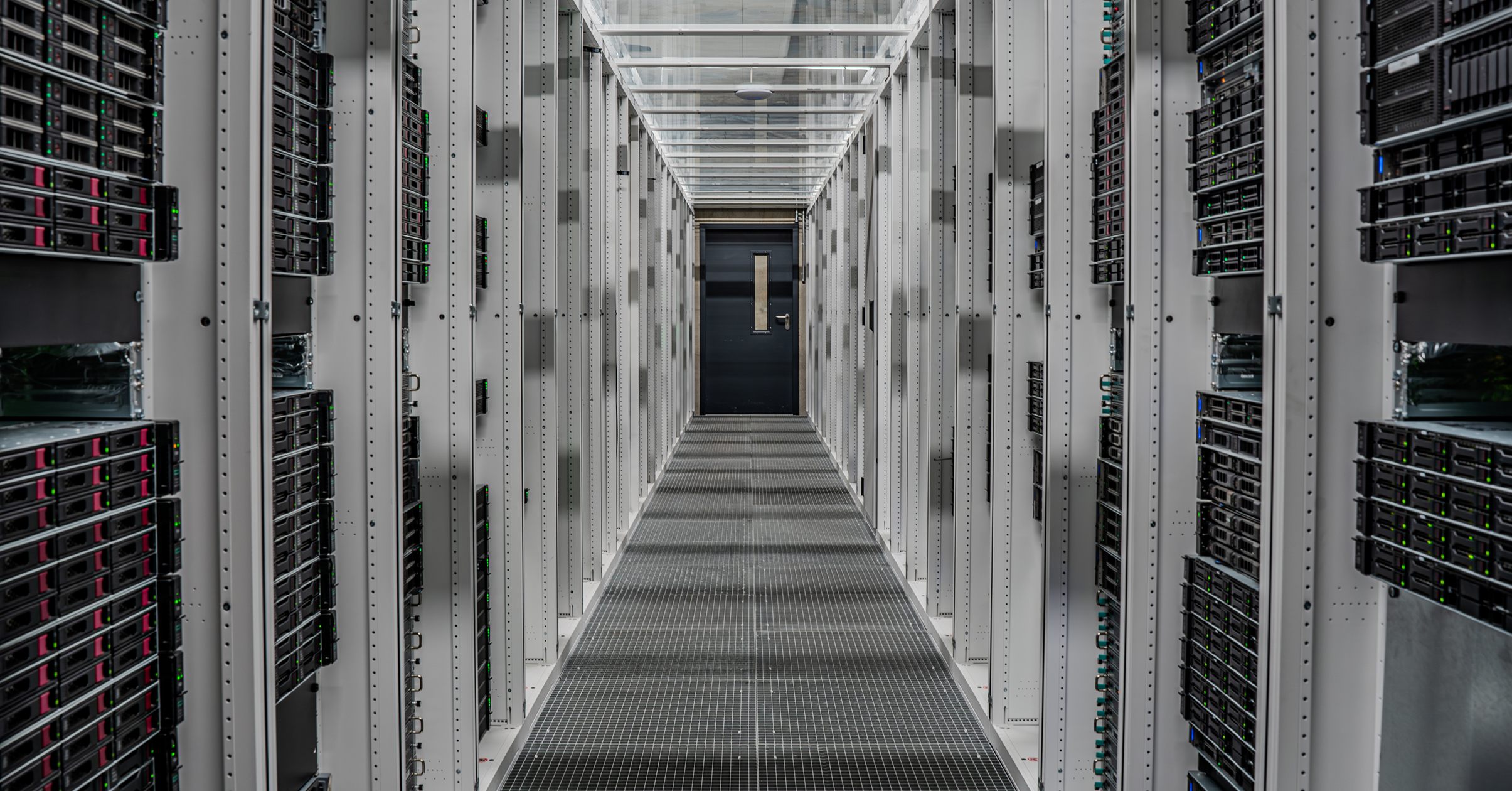
Apple ditched Intel to move its Macs to ARM processors, with one clear goal: more power, less energy consumption. At Infomaniak, when these energy-efficient processors arrived on the server market, we immediately asked ourselves whether we could make the most of these new chip architectures. Since 2023, we have been testing them in real-world conditions on part of our Public Cloud storage infrastructure. Here is what we have observed, and what it could change.
The same processors as in Macs, powering cloud storage
ARM processors are what allow recent MacBooks to run for hours without overheating and without draining the battery.
Storing data doesn’t require massive computing power. What it does require is consistency, reliability, and efficiency.
- Our storage servers based on standard x86 processors show performance fluctuations: these processors constantly adjust their speed and share multiple tasks across the same components, which under heavy load produces less predictable results.
- With ARM processors, this problem disappears: their architecture, different by design, delivers stable performance even when the load is at its peak.
So we wanted to find out for ourselves: do these processors live up to their promises on our Public Cloud and VPS storage infrastructure?
Up to 2.5x more efficient
What does this mean in practice?
Lower energy consumption
The figure that says it all: the processors we use can be up to 2.5x more energy-efficient than traditional x86 processors on cloud-native workloads. With several hundred servers in production, this can make a real difference in total energy consumption.
Simplified cooling
These processors can easily operate with simple air cooling, with no need for complex air conditioning or liquid cooling. At Infomaniak, our data centres have run without traditional air conditioning since 2013. This technology is therefore a natural fit for our model.
A high-performance infrastructure
Our data centres run GPU clusters and high-capacity processors for AI and demanding workloads without any issues. The choice of low-power processors is solely for storage, where raw computing power is not the priority. For our customers, the result is tangible: a more reliable cloud service with significantly better energy efficiency.
A choice rooted in our sustainability commitment
At Infomaniak, this choice is part of a broader strategy we have been pursuing since 2007, where every decision aims to reduce our environmental footprint in a measurable way.
Our data centres run entirely on locally sourced renewable electricity, mainly hydroelectric and solar. We also generate around 30% of our energy through our own solar installations.
On the hardware side, buying a new server is our main source of CO₂ emissions: between 1.7 and 2.5 tonnes per machine. That’s why we refurbish our servers and run them for up to 15 years, without compromising on performance, even for the most demanding workloads. Residual emissions we cannot avoid are offset at 200% — 100% in Switzerland and 100% internationally. Our data centre inaugurated in January 2025 is a prime example of this approach. 100% of the electricity it consumes is converted into heat, recovered and injected into the district heating network, with no external water consumption. In winter, it heats 6,000 homes. In summer, the recovered energy is equivalent to 20,000 five-minute showers per day. This is heat that would otherwise have been wasted. Today, it serves the community after powering computation and storage.
Using low-power processors is one more lever among all those we act on every day.
A sovereign, greener cloud infrastructure
Everything we’ve described translates directly into benefits for customers using our Public Cloud or VPS. In practice, a business can run its applications on managed Kubernetes, store its data on replicated databases we maintain for them, or plug sovereign AI into its products via an OpenAI-compatible API. We use open standards, making it easy to migrate and benefit from pricing that is up to 200% more competitive than hyperscalers.
For organisations subject to GDPR, nFADP, or sector-specific regulations, the entire chain is operated in Switzerland, under Swiss law, with no dependency on extraterritorial jurisdictions.
Try Infomaniak’s Public Cloud for yourself. We offer cloud credits for 3 months, with no commitment. And if you have a large-scale migration project or specific professional needs, our sales team is available to discuss them directly.
Technical specifications
Processors: Ampere® Altra® Cloud Native Processors, currently deployed on HPE ProLiant RL300 Gen 11 servers
Architecture: Single-threaded, multi-core, designed for cloud-native workloads
Usage: Storage infrastructure (backend for Infomaniak’s Public Cloud and VPS)
Performance: The ARM architecture is inherently less susceptible to the performance fluctuations observed on x86 CPUs when default settings (multi-threading, boost frequency, etc.) are enabled, making it particularly well suited for high-concurrency workloads such as distributed storage.
Learn more