
 Français
 Deutsch
 Italiano
 Español
In 2024, Infomaniak’s greenhouse gas emissions reached 2,124.8 tCO2e — a 31.4% reduction compared to 2023. This significant decrease is driven primarily by the decline in Infomaniak’s largest emission category. The overall picture reflects several underlying shifts in 2024: a revised calculation model, the transition of our new data centre into production, and changes to certain internal practices, particularly around commuting. To explain all of this, we are publishing this report in full and with complete transparency, to clearly show the origin and evolution of Infomaniak’s GHG emissions.
View our 2024 greenhouse gas report
A 31.4% drop in emissions: what’s behind the change
Four key dynamics shape the evolution of our GHG footprint, one of which offsets growth in other categories:
Electronic hardware remains the main driver of reduction
Electronic hardware remains the top emission category. In 2024, it fell by 36.2%, from 2,852.2 tCO₂e to 1,820 tCO₂e — accounting for most of the overall reduction.
Part of this decline reflects improved knowledge. Our partner Resilio has updated its calculation model to better capture the impact of wafers — the silicon substrates used in electronic components. In practice, this means a revised model based on the scientific databases used for carbon accounting (notably the Ecoinvent reference database).
Electricity impact remains contained despite business growth
In 2024, emissions from electricity purchases increased by 15.6%, driven by the growth of our operations.
Associated emissions rose from 65.6 tCO₂e in 2023 to 75.8 tCO₂e in 2024, reflecting an approximately 18% increase in consumption.
Commuting emissions are on the rise again
Emissions from home-to-work commuting increased by 35.6% in 2024. This reflects a notable upturn in the use of petrol cars (up to +66% for smaller models) and motorcycles (+49% in distance travelled).
Several factors explain this rise. Emissions per full-time equivalent (FTE) increased by 14%, and the average distance travelled per employee grew by 10%. At the same time, carpooling dropped sharply, falling from 25% to 14% of total distances.
Soft mobility and public transport now account for 65% of distances travelled (up from 63% in 2023). Progress is positive, but does not offset the rise in individual motorised commuting.
Greater office space drives higher heating emissions
Heat consumption increased by 10% in 2024, leading to a 13.5% rise in emissions from this category. This is attributable to the expansion of space at our head office in line with headcount growth.
Secondary changes with limited overall impact
Waste returns to normal levels
Waste-related emissions fell by 80.2% between 2023 and 2024 (from 3.1 to 0.6 tCO₂e). In 2023, the closure of the Vernier data centre had generated an exceptional volume of waste, inflating this category significantly. 2024 marks a return to normal.
Paradoxically, the physical volume of waste increased by 23% in 2024, while its carbon impact fell sharply. This is explained by a new calculation method in Switzerland: incinerable waste is now considered near carbon-neutral, as the heat generated through combustion is recovered to heat buildings. This category has become marginal in Infomaniak’s overall footprint.
Business travel remains well managed
Emissions from business travel decreased by 0.9% between 2023 and 2024, despite higher activity levels. The predominance of public transport helps keep these emissions in check.
Catering emissions are up
The catering footprint jumped by 58.9% (24.9 tCO₂e), representing 1.1% of total emissions. This increase relates to company-funded meals and beverages (coffee, tea, water). Without a detailed explanation, the report highlights one key insight: bottled water has a carbon footprint 1,000 times greater than tap water.
2023 and 2024: comparing two very different years
In 2024, greenhouse gas emissions fell by 31.4% across the operational scope.
When the full scope including data centres is taken into account, the reduction reaches 58%. This is a one-off effect: it reflects the stark difference between the carbon cost of constructing the D4 data centre (1,961.9 tCO₂e) in 2023 and 2024, which is the first full year of normal operations.
The central challenge of the 2024 annual report is to account for an exceptional investment like a new data centre without obscuring the underlying trend in Infomaniak’s emissions. To that end, the 2024 reporting framework was adjusted: 2023 data was restated to include the construction emissions. The 2024 figures therefore reflect only D4’s ongoing operations, not its construction phase — the impact of which was fully offset in 2024. We explain the carbon impact of D4’s construction in this article.
D4 is a strategic investment to reduce our GHG emissions over the medium and long term
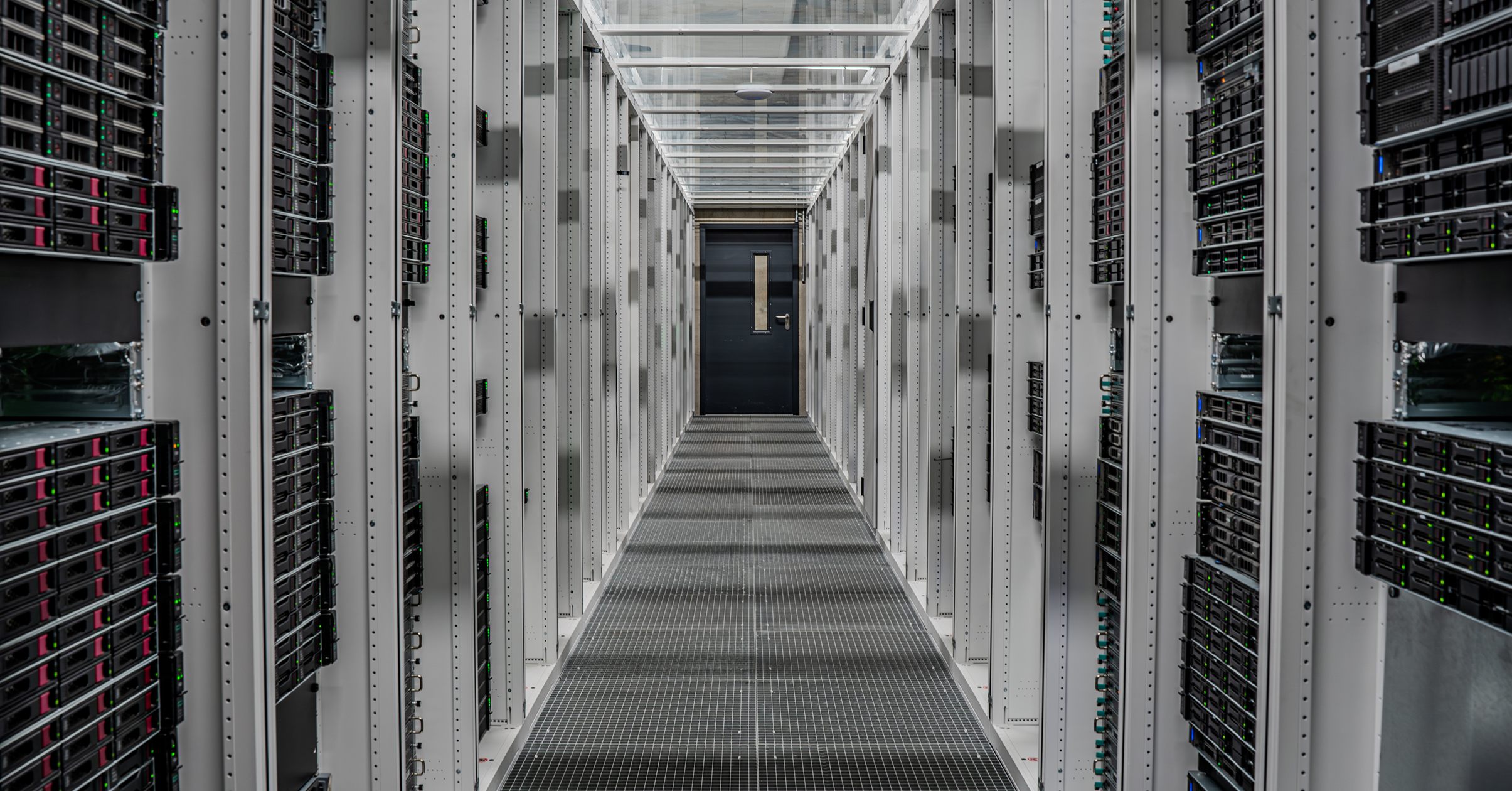
D4 came online at a time of rapid acceleration in demand for artificial intelligence. It enables the launch of Euria, our privacy-respecting AI, under more energy-efficient conditions: each query sent to Euria generates heat, which is recovered and fed into the district heating network — with a capacity to supply up to 6,000 homes. This infrastructure runs entirely on certified renewable energy and puts the heat it produces to use rather than wasting it.
The carbon cost of building D4 must be viewed in the context of its high energy efficiency in operation and its contribution to the district heating network.
Learn more




How Infomaniak is looking to reduce its energy consumption with Arm processors
Thursday April 2nd, 2026